

What About Quick Summary?
Major automakers including Mercedes-Benz, Audi, and Volvo are rejecting Apple CarPlay Ultra to protect their subscription revenue and data control. This creates five hidden traps for car buyers: depreciating resale value, insurance surveillance through driving data, expensive proprietary repairs, safety risks from unfamiliar UI, and smart home ecosystem lockout. CARLUEX wireless CarPlay adapters offer an escape route—preserving your CarPlay experience while avoiding automaker control. CARLUEX AIR is one of the easiest ways to add wireless CarPlay. Browse CARLUEX wireless adapters to find the right fit for your car.
What About The Invisible War in Your Dashboard?

When Your Car Becomes a Battleground
You slide into the driver's seat, iPhone in hand, expecting the familiar CarPlay interface to greet you. Instead, you're met with a clunky automaker system demanding subscription fees for features that should be standard. This isn't a glitch—it's the front line of an invisible war between automakers and Apple, and you're caught in the crossfire.
For years, CarPlay has been the CARLUEX of in-car technology: reliable, familiar, and free. But now, automakers are fighting back. They're not just rejecting the next generation of CarPlay—they're building walls around their own systems, and the cost of entry is your data, your money, and your freedom to choose.
The $2 Trillion Elephant in the Room
Apple's ecosystem dominance extends far beyond your pocket. According to industry data, 98% of new cars in the U.S. support CarPlay, and American drivers use the system over 600 million times daily. For iPhone users, CarPlay isn't a luxury—it's an expectation as standard as power windows.
This ubiquity is exactly what terrifies automakers. When your car's interface becomes an extension of your iPhone, the automaker's brand fades into the background. You're not driving a Mercedes or a Ford—you're driving an Apple device on wheels. And that, from the automakers' perspective, is a problem worth billions.
Why Automakers Are Suddenly Fighting Back

The turning point came in June 2025. Financial Times reported that five major automakers—Mercedes-Benz, Audi, Volvo, Polestar, and Renault—had explicitly rejected CarPlay Ultra, Apple's most ambitious in-car system yet. A Renault executive didn't mince words: "Don't try to invade our system."
General Motors had already fired the opening shot, announcing in 2023 that it would eliminate CarPlay entirely from its electric vehicles starting in 2024. The message was clear: the era of free, seamless smartphone integration is ending, and automakers are ready to charge admission.
What About The CarPlay Ultra Rebellion?
"Don't Try to Invade Our System"—The Renault Warning
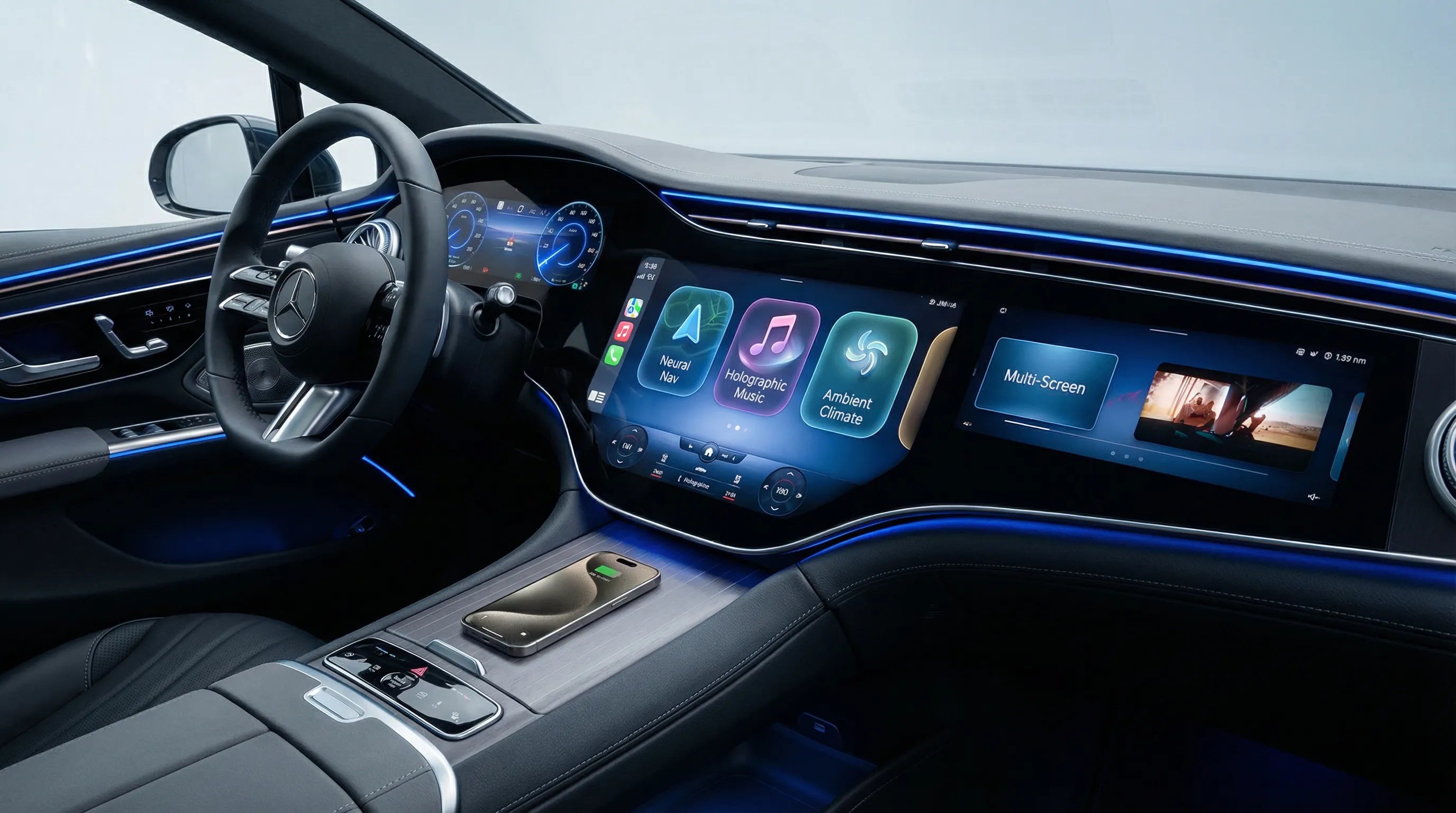
CarPlay Ultra isn't just an upgrade—it's a takeover. Unlike standard CarPlay, which mirrors your iPhone's apps on the car's center screen, Ultra integrates deeply with the vehicle itself. It can display real-time vehicle data—speed, fuel level, temperature—directly on the dashboard and even control climate settings.
For automakers, this represents an existential threat. If Apple controls the interface, Apple controls the user experience. And if Apple controls the user experience, how can Mercedes justify charging $698 annually for navigation? How can BMW sell heated seat subscriptions? The answer, increasingly, is that they can't—so they're choosing to lock Apple out instead.
The Split: Who's In, Who's Out
The automotive industry has fractured into two camps. On one side, Aston Martin embraced CarPlay Ultra as a competitive differentiator, with Porsche signaling plans to follow. On the other, the rejections keep mounting: Mercedes, Audi, Volvo, Polestar, Renault, BMW, and Rivian have all publicly withdrawn or declined.
Even Tesla, long the holdout with its proprietary system, reportedly explored CarPlay integration before hitting technical roadblocks. The message is clear: the battle for your dashboard is intensifying, and neutrality is no longer an option.
It's Not About Technology—It's About Money and Control
Behind the technical jargon and corporate press releases lies a simple truth: automakers have discovered that software is more profitable than steel. A car sold is a transaction complete. But a car connected is a revenue stream that lasts the vehicle's lifetime.
Subscriptions for navigation, premium audio, remote start, and even heated seats represent billions in potential annual revenue. CarPlay threatens this model by offering superior alternatives for free. Apple Maps versus Mercedes navigation. Spotify versus BMW's streaming service. The choice, for consumers, is obvious—which is precisely why automakers are determined to remove it.
What About You're the Casualty in This War: The Five Traps 🪤?

What You're Risking
When automakers lock out CarPlay, they expose car buyers to five hidden costs: accelerated depreciation, privacy invasion through data sales, expensive proprietary repairs, safety risks from unfamiliar interfaces, and ecosystem isolation. Each trap carries real financial and practical consequences that most buyers don't discover until it's too late.
The Deal-Breaker Statistics
Before we explore the traps, consider this: McKinsey research reveals that 30-35% of global car buyers consider CarPlay a "must-have" feature. In the U.S., 38% of gasoline vehicle buyers won't purchase a car without it. These aren't niche enthusiasts—they're mainstream consumers who've grown dependent on seamless smartphone integration.
Yet as automakers retreat from CarPlay, these buyers face an uncomfortable choice: compromise on their digital experience, or pay hidden costs they never anticipated. Here are the five traps waiting for the unwary.
Trap #1: The "Resale Value" Time Bomb 💣
Here's a math problem automakers hope you won't solve: your smartphone updates every 2-3 years. Your car lasts 10-15 years. CarPlay's genius is bridging this gap—your car's interface stays current because it simply displays whatever's on your latest iPhone.
Automaker systems don't work this way. That cutting-edge Mercedes MB.OS or GM Android Automotive system? In five years, it'll run like a 2019 Android tablet—slow, outdated, and abandoned by its maker. No more updates. No new features. Just a $50,000 car with a brain frozen in time.
The financial hit: In the used car market, functional CarPlay is increasingly a baseline expectation. A vehicle with a sluggish, outdated proprietary system faces significant depreciation penalties. That "free" automaker system you accepted? It'll cost you thousands when you sell.
Trap #2: The "Insurance Snitch" 🕵️

Here's something automakers don't advertise: when you use their connected systems, you're consenting to comprehensive data collection. Every hard brake, every acceleration, every late-night drive, every destination—recorded, analyzed, and potentially sold.
CarPlay, by contrast, keeps your data on your iPhone. Apple doesn't harvest your driving behavior to sell to third parties. But automakers? They're building billion-dollar businesses around Usage-Based Insurance (UBI)—analyzing your driving data and sharing it with insurance companies.
The hidden cost: That seemingly innocent connected car feature could raise your insurance premiums based on behaviors you didn't even know were being monitored. Drive late at night? Brake hard to avoid an accident? Your car might be telling your insurer—and you'll never know until your rates jump.
Trap #3: "Software Depreciation" & "Hardware Lock-In" 🔒

CarPlay is elegantly simple: it's software mirroring. Your iPhone does the processing; your car just displays the result. If something goes wrong, restart your phone or replace a cable. Problem solved.
Automaker systems are the opposite—deeply integrated with proprietary hardware. When the software crashes (and it will), it can cascade through connected systems. Climate control: offline. Backup camera: disabled. Advanced safety features: unavailable. You're not just rebooting a screen; you're potentially disabling critical vehicle functions.
The repair nightmare: Because these systems are proprietary and locked down, independent mechanics can't touch them. You're hostage to the dealership—and their pricing. A software glitch that would be a five-minute phone restart with CarPlay becomes a $2,000-$5,000 module replacement at the automaker's mercy.
Trap #4: Muscle Memory & Road Safety Threat ⚠️

CarPlay's interface is globally consistent. Whether you're driving a Toyota in Tokyo or a Ford in Frankfurt, the icons, gestures, and layout remain familiar. This consistency isn't just convenient—it's safety-critical. When you need to skip a song or adjust navigation, muscle memory takes over. Your eyes stay on the road.
Automakers, desperate for "differentiation," each design unique interfaces. Some bury climate controls three menus deep. Others replace physical buttons with unpredictable touchscreens. The result? Every new car requires relearning basic functions, forcing drivers to divert attention from driving.
The safety cost: Studies consistently show that unfamiliar interfaces increase cognitive load and distraction. When you're hunting for the defrost button in an unfamiliar menu, you're not watching traffic. Automakers' design vanity is literally putting lives at risk.
Trap #5: Ecosystem "Forced Isolation" 🏠
Modern life flows seamlessly between devices. Your iPhone connects to your Apple Watch, your AirPods, your HomeKit devices. With CarPlay, that ecosystem extends to your car—tap a button on your dashboard to open the garage, adjust home temperature, or check security cameras.
Automakers are systematically dismantling this integration. Their "smart" systems don't speak HomeKit. They don't integrate with your existing devices. Instead, they push proprietary alternatives—new apps, new subscriptions, new hardware purchases.
The ecosystem tax: To maintain the smart home integration you already had, automakers force you to buy their recommended devices—or abandon the functionality entirely. Your car becomes a digital island, disconnected from the rest of your life. The "smart" car just made everything less smart.
The Ecosystem Lock-In Trap (Summary)
Five traps. Five hidden costs. Five reasons why the automaker-Apple war isn't just corporate drama—it's a direct threat to your wallet, your privacy, your safety, and your digital freedom.
But you're not powerless. While automakers and Apple battle for control, there's a third option—one that preserves your CarPlay experience while escaping the traps entirely.
How Do I Escape the Traps (The CARLUEX Solution)?

The Escape Route
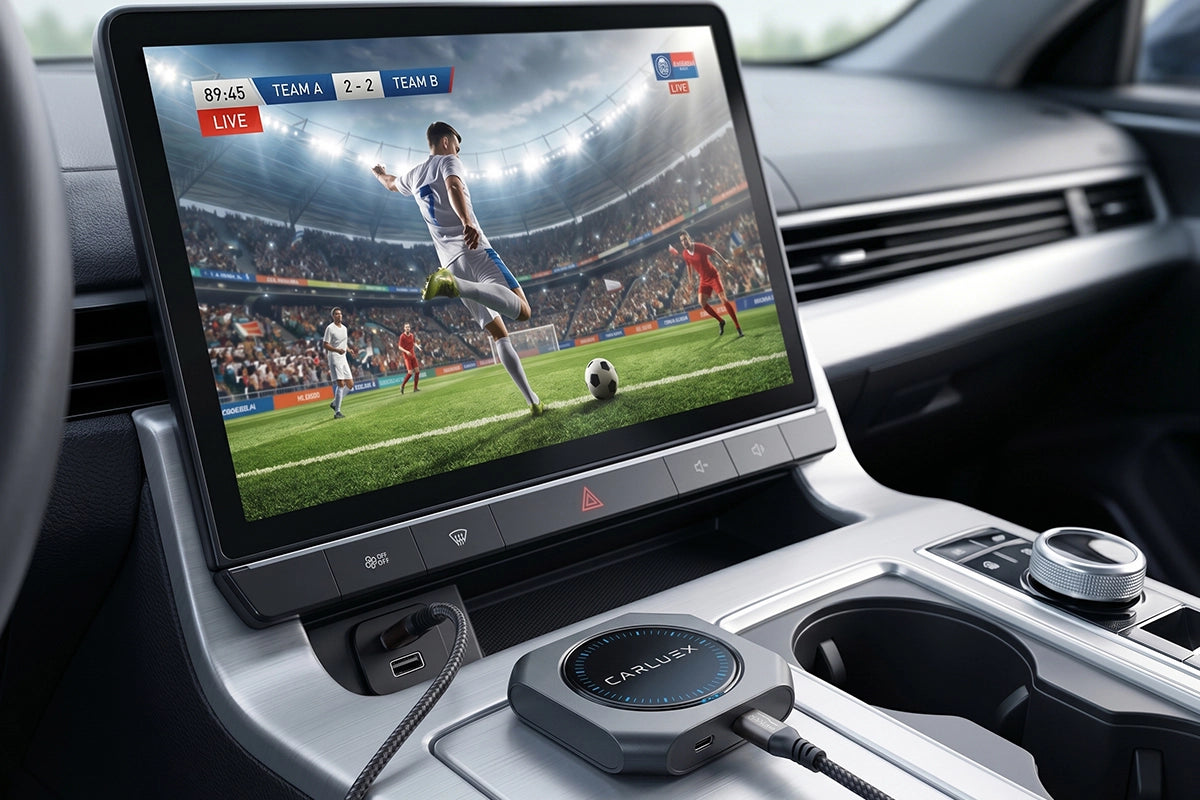
CARLUEX wireless CarPlay adapters convert wired CarPlay connections to wireless, bypassing automaker restrictions while preserving full CarPlay functionality. The CARLUEX PRO+ 2.0 offers Android 13 system, 4K streaming, and complete app ecosystem freedom—turning any CarPlay-equipped vehicle into a smart entertainment hub without automaker subscriptions or data surveillance.
Breaking Free: Why Wireless Matters
The first step to escaping automaker control is breaking the physical connection. Wired CarPlay tethers you to the automaker's hardware—if their system fails, you're stranded. Wireless adapters create a buffer, an independent layer between your iPhone and the car's increasingly proprietary systems.
CARLUEX PRO+ 2.0 doesn't just cut the cord—it cuts your dependency on the automaker's hardware ecosystem. With 8-core Android 13 processing, 4K streaming capability, and a complete app store, it transforms your car's screen into an independent smart device that happens to display CarPlay, not a locked-down portal to automaker services.
The CARLUEX Difference: Five Solutions for Five Traps
Solution #1: Future-Proof Your Investment
While automaker systems become obsolete in 5 years, CARLUEX ensures your car's infotainment stays current. Because it runs on Android 13 with access to the Google Play Store, apps update continuously. Your 2018 Honda with a CARLUEX AIR adapter streams 2026 content with 2026 performance.
More importantly, because CarPlay simply mirrors your iPhone, your "car system" updates whenever you update your phone. No subscription required. No dealer visit necessary. Just persistent, current technology that protects your vehicle's resale value instead of destroying it.
Solution #2: Your Data Stays Yours
With CARLUEX, your driving habits, destinations, and personal data remain on your iPhone—not in an automaker's cloud, and definitely not in an insurance company's database. The adapter functions as a signal converter, not a data harvester. It doesn't store your history, analyze your behavior, or transmit your information to third parties.
When you want privacy, you get it. Delete your CarPlay history on your iPhone, and it's gone—no persistent profiles, no sold data, no surveillance premiums. Your car becomes a private space again, not a monitoring station.
Solution #3: No More Hostage Repairs
Here's the beautiful simplicity of CARLUEX: if the adapter fails, replace the adapter. A $139 CARLUEX GO unit versus a $3,000 dealership module replacement. No diagnostic fees. No waiting for proprietary parts. No being told "the whole system needs replacement."
Even better, because CARLUEX runs independently, an adapter failure doesn't disable your car's essential functions. Climate control still works. Backup cameras still function. You're inconvenienced, not immobilized—and the fix arrives in an Amazon box, not a tow truck.
Solution #4: Safety Through Familiarity
Whether you're driving a Toyota, a Ford, or a rental car, CARLUEX gives you the same CarPlay interface you know by heart. The icons don't move. The gestures don't change. When you need to skip a track or adjust navigation, muscle memory takes over instantly—so your eyes stay on the road, not hunting through unfamiliar menus.
For families with multiple vehicles, this consistency is transformative. Switch from the Honda to the BMW, and your interface remains identical. No relearning. No dangerous distraction. Just safe, predictable interaction with technology that works the way your brain expects.
Solution #5: Your Ecosystem, Unbroken
CARLUEX PRO+ 2.0 doesn't just preserve CarPlay—it enhances it. With full Android 13 support, you can run HomeKit-compatible apps alongside CarPlay, maintaining your smart home integration. Tap your dashboard to open the garage, adjust the thermostat, or check your security cameras—all through the Apple ecosystem you already own.
Unlike automaker systems that force you into their proprietary smart home ecosystems, CARLUEX embraces openness. Use what you have. Connect what you own. Your digital life flows seamlessly from pocket to car to home, without artificial barriers or forced purchases.
Beyond Basic Adapters: The PRO+ 2.0 Advantage
Not all wireless adapters are created equal. While budget options simply mirror your phone, CARLUEX PRO+ 2.0 is a complete multimedia AI box that happens to include wireless CarPlay.
| Feature | Basic Adapters | CARLUEX PRO+ 2.0 |
|---|---|---|
| Wireless CarPlay | ✓ | ✓ |
| Android System | ✗ | ✓ Android 13 (8-core) |
| 4K Streaming | ✗ | ✓ YouTube/Netflix |
| App Store Access | ✗ | ✓ Google Play Store |
| Built-in Navigation | ✗ | ✓ No subscription required |
| SIM Card Support | ✗ | ✓ Independent connectivity |
The difference isn't just feature count—it's philosophy. Basic adapters help you escape automaker restrictions. CARLUEX PRO+ 2.0 helps you build something better in their place: a truly smart car experience that puts you in control.
One Adapter, Complete Freedom
Installation takes minutes. Plug the adapter into your car's USB port, pair your iPhone, and you're free. Free from subscription fees. Free from data surveillance. Free from proprietary repair chains. Free from interface confusion.
CARLUEX works with any vehicle that has wired CarPlay—which means nearly every car made since 2016. Whether you're driving a 2018 Honda Civic or a 2023 BMW, the escape route is the same: one adapter, instant liberation.
The automakers want you to believe their way is the only way. Apple wants you to wait for their next system. But you don't have to choose sides in their war. CARLUEX offers a third path: your car, your phone, your rules.
Ready to Take Back Control?
Don't let automakers dictate your driving experience. Discover how CARLUEX PRO+ 2.0 can transform your car into the smart, free, connected space it should be.
Explore CARLUEX PRO+ 2.0 →The Future: What Happens Next?
Will Apple Surrender or Double Down?
Apple doesn't typically retreat from strategic battles, but CarPlay Ultra's reception has been uniquely hostile. The company may pivot—offering automakers more control, more customization, or revenue-sharing models that make integration palatable.
Alternatively, Apple might accelerate its rumored automotive ambitions. If automakers won't welcome Apple into their dashboards, Apple might build its own dashboard—on four wheels. The long-rumored Apple Car would render the entire debate moot.
The Rise of Automotive Walled Gardens
The more likely scenario: automakers double down on proprietary systems. Mercedes' MB.OS, GM's Android Automotive, Tesla's Linux-based interface—each represents a bet that drivers will accept fragmentation in exchange for "unique" experiences.
For consumers, this means the golden age of seamless smartphone integration may be ending. The future could involve choosing your car based on which ecosystem you prefer—Apple, Google, or automaker—not which vehicle best meets your needs.
Your Move: Adapt or Be Adapted
In this fractured future, third-party solutions like CARLUEX become not just conveniences but necessities. They represent digital autonomy—the ability to choose your experience regardless of what automakers and tech giants decide.
The war for your dashboard won't end soon. But with the right tools, you don't have to be collateral damage. You can be the victor—driving on your terms, with your technology, in your control.
What About Frequently Asked Questions?
Is CarPlay really that important to car buyers?
Yes. According to McKinsey research, 30-35% of global car buyers consider CarPlay a "must-have" feature. In the U.S., 38% of gasoline vehicle buyers won't purchase a car without CarPlay support. For many iPhone users, it's as essential as air conditioning or power windows.
Why are automakers rejecting CarPlay Ultra?
Three reasons: revenue (CarPlay offers free alternatives to paid subscription services), data control (automakers can't monetize driving behavior data when you use CarPlay), and brand identity (Apple's interface overshadows automaker branding). When Apple controls the screen, automakers lose control of the customer relationship.
What's the difference between CARLUEX PRO+ 2.0 and cheaper adapters?
Basic adapters only convert wired CarPlay to wireless. CARLUEX PRO+ 2.0 is a complete multimedia AI box with 8-core Android 13, 4K streaming (YouTube/Netflix), Google Play Store access, built-in navigation (no subscription), and SIM card support for independent connectivity. It's the difference between a simple adapter and a complete in-car entertainment system.
Will wireless CarPlay work in my older car?
If your car has wired CarPlay (most vehicles 2016+), CARLUEX adapters will work. The adapter plugs into your car's USB port and creates a wireless bridge to your iPhone. Even older vehicles without touchscreens can use CARLUEX GO with the included Bluetooth remote control.
Am I locked into Apple if I use CarPlay?
CarPlay requires an iPhone, yes—but CARLUEX PRO+ 2.0 offers flexibility that pure CarPlay doesn't. With its Android 13 system, you can switch between CarPlay (for iPhone users) and Android Auto (for Android users), or use the built-in apps independently. It's ecosystem flexibility, not ecosystem lock-in.
What About Take Back Your Drive?
The War Isn't Over, But You Can Choose Your Side
The battle between automakers and Apple will rage for years. Billions of dollars are at stake. Corporate strategies will shift, alliances will form and dissolve, and the technology landscape will transform multiple times.
But you don't have to wait for the victor. You don't have to accept the five traps—depreciating value, surveillance, expensive repairs, safety risks, and ecosystem isolation. You don't have to choose between automaker control and Apple dependence.
CARLUEX PRO+ 2.0: Your Weapon of Choice
CARLUEX represents something increasingly rare in today's tech landscape: genuine user empowerment. It's not about picking sides in a corporate war. It's about refusing to be a pawn in one.
With CARLUEX PRO+ 2.0, you get the CarPlay experience you love, the Android flexibility you might need, the streaming entertainment you want, and the privacy and control you deserve—without subscription fees, data harvesting, or proprietary lock-in.
The automakers and Apple will continue their fight. But with the right adapter, that fight stays where it belongs: between them. Your car remains yours. Your data remains yours. Your experience remains yours.
That's not just convenience. That's freedom.
Free shipping • 30-day returns • 1-year warranty


Leave a comment
This site is protected by hCaptcha and the hCaptcha Privacy Policy and Terms of Service apply.