
Which cars have Apple CarPlay? Since Apple introduced CarPlay in 2014, it has become one of the most widely adopted in-car smartphone integration systems — available as standard or optional equipment on virtually every major brand sold in the US and Europe. From affordable compacts like the Honda Civic to luxury sedans like the BMW 5 Series, CarPlay is now within reach for most car buyers.
This guide gives you the full picture: which brands and specific models support CarPlay, the difference between wired and wireless CarPlay, which cars offer it as standard vs. optional, and how to add CarPlay to older vehicles that don't have it. New to CarPlay? Start with our complete overview guide.

What Cars Have Apple CarPlay? The Brands and Models That Support It

Which Brands Offer Apple CarPlay?
Apple CarPlay is now standard or optional across the overwhelming majority of new cars sold in the US. Here's how the major brands break down:
- Standard on most new models: Acura, Audi, BMW, Buick, Cadillac, Chevrolet, Chrysler, Dodge, Ford, GMC, Honda, Hyundai, Infiniti, Jaguar, Jeep, Kia, Land Rover, Lexus, Lincoln, Mazda, Mercedes-Benz, Nissan, Porsche, Ram, Subaru, Tesla, Toyota, Volkswagen, Volvo
- Optional / market-specific: Some trim levels or regional models may still offer CarPlay as a paid add-on rather than standard.
Apple publishes an official CarPlay model listing that covers most major brands. For the most current availability by specific model year, check your manufacturer's website or the CARLUEX buying guide for wireless CarPlay adapters if you're adding CarPlay to an older vehicle.
CarPlay by Body Style: Compact to Full-Size
CarPlay availability spans every vehicle category:
- Compact cars: Honda Civic, Toyota Corolla, Mazda3, Hyundai Elantra, Kia Forte — typically offer CarPlay as standard from mid-trim onward
- Sedans: Toyota Camry, Honda Accord, Nissan Altima, Subaru Legacy, Volkswagen Jetta — CarPlay standard on most trims
- SUVs & Crossovers: Toyota RAV4, Honda CR-V, Mazda CX-5/CX-30, Ford Escape, Chevrolet Equinox — CarPlay widely available
- Luxury sedans: BMW 3/5/7 Series, Mercedes-Benz C/E/S Class, Audi A4/A6, Lexus ES/GS — CarPlay typically standard with premium packages
- Pickup trucks: Ford F-150, Chevrolet Silverado, Ram 1500, GMC Sierra — CarPlay standard on most trims from 2018 onward
- Minivans: Chrysler Pacifica, Honda Odyssey, Toyota Sienna — CarPlay available on most trims
When Did Cars Start Supporting Apple CarPlay?
CarPlay Timeline: 2014 to Today
Apple CarPlay launched in 2014 with the iPhone 5S and iOS 7.1, first appearing as a factory option on the 2015 Honda Civic and Ferrari FF. Here's the broad adoption curve:
- 2014–2015: Pilot phase — limited to a handful of brands (Ferrari, Honda, Hyundai, Mercedes-Benz)
- 2016: Mass adoption begins — most major brands add CarPlay as option or standard
- 2017–2019: Standard equipment on mid-trim and above across most brands
- 2020–present: CarPlay standard on nearly all new vehicles; wireless CarPlay now appearing as a differentiator
As of 2025–2026, CarPlay is so prevalent that its absence is notable. Our complete CarPlay guide covers the full history and feature set.
Which Model Year Did My Car Get CarPlay?
If you're shopping used, here's a quick reference for when popular brands introduced CarPlay:
- Honda: Standard from 2016 Civic onward; some 2015 models have it
- Toyota: Standard from 2020 Camry and 2020 RAV4 onward; earlier 2019–2020 models have it on certain trims
- Ford: Standard from 2017 F-150 onward; SYNC 3 required
- BMW: Standard from 2017 5 Series onward (2016 with optional Connected Drive)
- Audi: Standard from 2017 A4/Q7 onward
- Chevrolet: Standard from 2016 Silverado, Impala, Malibu onward
- Tesla: Tesla does NOT support Apple CarPlay or Android Auto — it uses its own proprietary operating system
Cars with Wireless Apple CarPlay: Which Models Don't Need a Cable?

Factory Wireless CarPlay: 2020 and Beyond
Factory wireless CarPlay — where no USB cable is required — started appearing as standard or optional equipment around 2020. Many 2025–2026 models now offer it:
- BMW: Wireless CarPlay standard on most 2020+ models with iDrive 7/8
- Mercedes-Benz: MBUX systems support wireless CarPlay from 2019 onward
- Audi: MIB 3 systems support wireless CarPlay on 2021+ models
- Ford/Lincoln: SYNC 4 enables wireless CarPlay from 2020 Escape, F-150 onward
- Honda/Acura: Wireless CarPlay on 2021+ Accord, CR-V, and newer
- Toyota/Lexus: Wireless CarPlay standard on 2023+ Tundra, Crown, and newer models
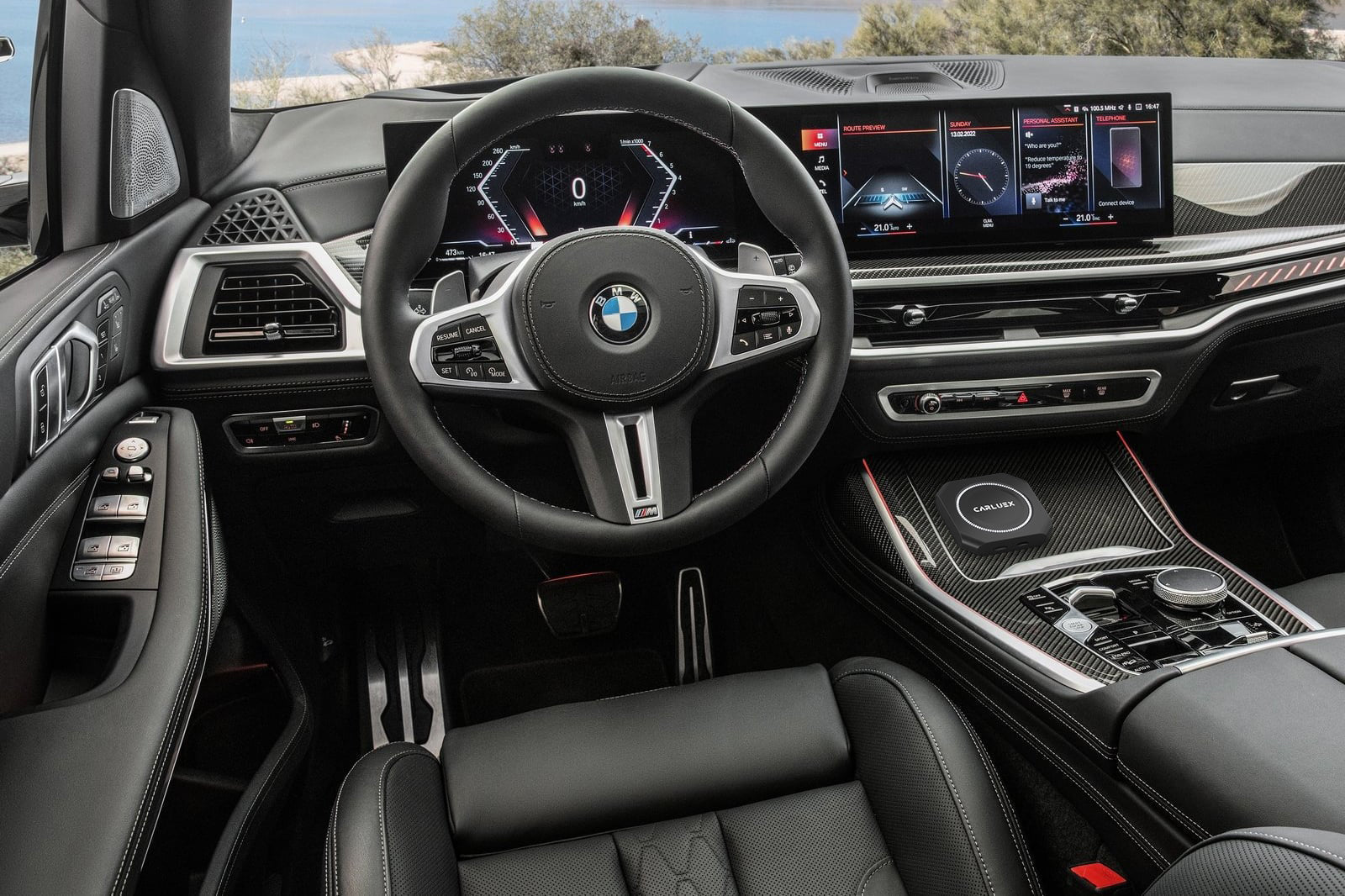
If your car has only wired CarPlay, a wireless CarPlay adapter like the CARLUEX AIR can upgrade it to wireless without any hardware modification.
Adding Wireless CarPlay to Older Vehicles
Even if your car came with only wired CarPlay or no CarPlay at all, you have two main paths to upgrade:
- For cars with factory wired CarPlay: A wireless CarPlay adapter (such as the CARLUEX AIR) plugs into your existing USB port and converts it to wireless in seconds
- For cars without any CarPlay: An aftermarket Android-based CarPlay AI box like the CARLUEX PRO+ 2 adds the full CarPlay/Android Auto experience independently, with additional features like Netflix and YouTube
Why Apple CarPlay Adoption Matters: Market Data and Trends
Consumer Demand: CarPlay Is Now a Buying Factor
CarPlay has moved from a novelty to a must-have feature for many car buyers:
- According to a McKinsey & Company automotive survey, approximately 30% of global car shoppers consider lack of smartphone integration — including CarPlay — a deal-breaker when choosing a vehicle
- Industry data shows roughly one-third of new car buyers specifically require CarPlay compatibility before purchasing
- Cars without smartphone integration tend to score lower in user satisfaction surveys, particularly among buyers aged 25–45
The Electric Vehicle Factor
Even in the EV market — where brands like Tesla famously omit CarPlay — consumer demand is reshaping the landscape. Several non-Tesla EVs now offer CarPlay as standard, including models from Hyundai (Ioniq 5/6), Ford (Mustang Mach-E, F-150 Lightning), and BMW (iX, i4, i5). This gives EV buyers who prefer CarPlay's familiar interface more choices than ever.
Future Outlook: CarPlay Ultra and Beyond
Apple announced CarPlay Ultra in 2024, an expanded version that integrates more deeply with vehicle data — including speed, fuel level, climate controls, and more — directly within the CarPlay interface. CarPlay Ultra debuted on select 2024 Aston Martin models, with broader adoption expected through 2025–2026. See our CarPlay Ultra vs. standard CarPlay comparison for full details.
Frequently Asked Questions
What are the most affordable cars equipped with Apple CarPlay?
As of 2025, the most budget-friendly new cars with Apple CarPlay include the 2025 Nissan Versa (starting around $17,000), 2025 Mitsubishi Mirage (around $16,000), and the 2025 Hyundai Accent (around $17,500). Among these, the Hyundai Accent and Nissan Versa typically include CarPlay as standard even on the base trim. If buying used, look for 2017–2019 Honda Civic, Toyota Corolla, or Hyundai Elantra — all widely available with CarPlay from $12,000–$18,000.
Which used car models come with Apple CarPlay functionality?
Most manufacturers started offering CarPlay around 2016. Good used car picks with CarPlay include the 2017–2021 Honda Civic, 2018–2021 Toyota Camry, 2019–2021 Mazda CX-5, 2017–2020 Chevrolet Silverado, and 2018–2020 Ford F-150. When shopping used, always verify that the specific trim level has CarPlay — some base-trim models from 2016–2017 may still have only Bluetooth without CarPlay. Use our compatibility checker to confirm before purchasing.
From what year onwards do cars typically include Apple CarPlay?
Most major brands began offering CarPlay as an option in 2016 and made it standard on most trims by 2019. As a rule of thumb: if your car was made in 2019 or later, it's very likely to have CarPlay. For 2016–2018 vehicles, CarPlay availability varies by brand and trim. Always check the specific model's spec sheet or call the dealership to confirm.
Does Tesla support Apple CarPlay?
No — Tesla vehicles do not support Apple CarPlay or Android Auto. Tesla uses its own proprietary in-car operating system, which provides mapping (via Tesla's built-in Google Maps integration), music streaming (Spotify, Tidal), and limited app support. If you own a Tesla and want CarPlay, there is no official workaround, though some third-party adapters claim to replicate the experience (functionality varies).
Can I add Apple CarPlay to a car that doesn't have it?
Yes — in two main ways. If your car has a factory infotainment screen but no CarPlay, an aftermarket CarPlay AI box (such as the CARLUEX PRO+ 2) can add full CarPlay and Android Auto with no installation required. If your car has wired CarPlay but you want wireless, a wireless adapter like the CARLUEX AIR simply plugs into your existing USB port. See our upgrade guide for step-by-step options.
What is the difference between wireless and wired Apple CarPlay?
Wired CarPlay uses a Lightning cable connecting your iPhone to the car's USB port. Wireless CarPlay communicates via Bluetooth (for initial pairing) and then 5GHz Wi-Fi (for data), eliminating the cable entirely. Performance is essentially identical for navigation and music, though some users report marginally faster response with wired connections in rare cases. See our full wireless vs. wired comparison for 2025.


Leave a comment
This site is protected by hCaptcha and the hCaptcha Privacy Policy and Terms of Service apply.