
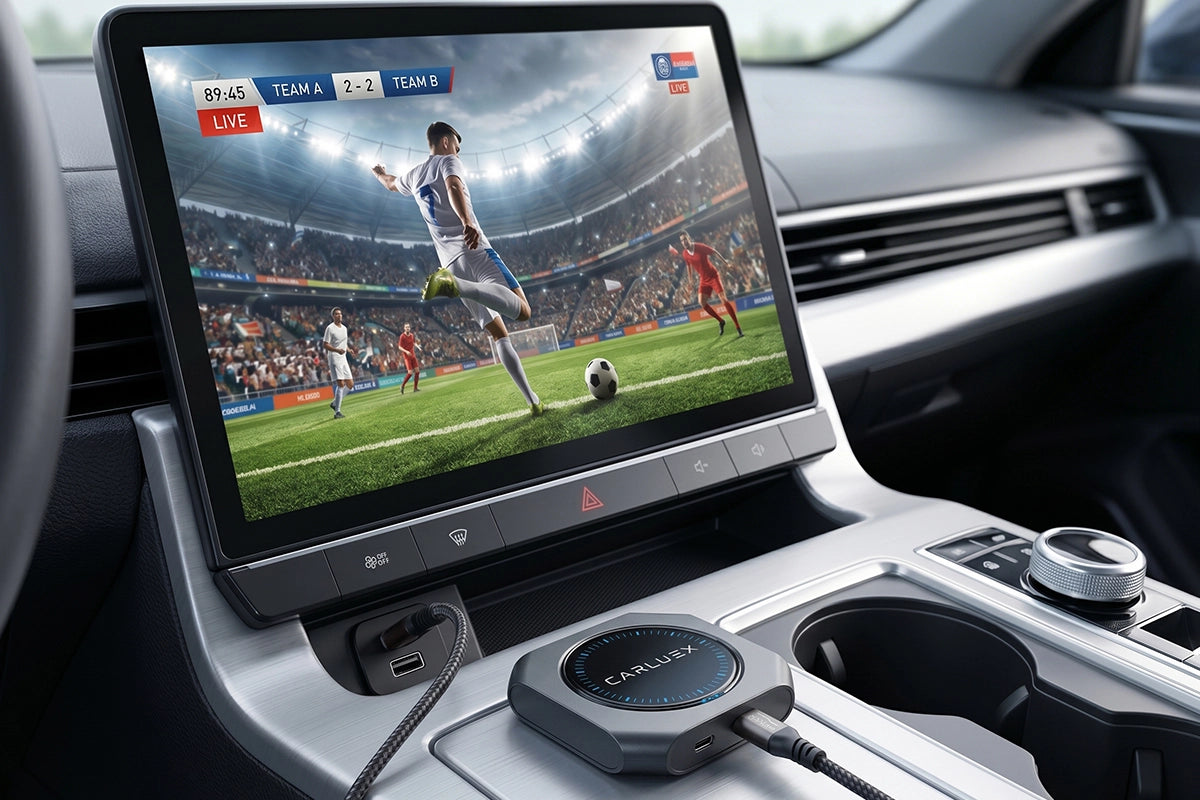

Google Play in Cars: What the New Google Built-in Update Means
Google is changing the app experience in cars that use Google built-in. The announcement is interesting for drivers who want more apps, easier discovery, and a smoother transition from parked entertainment to driving audio. The important question, however, is not whether every car will receive the same experience. It is whether your specific vehicle uses the software path Google is describing and whether the feature has reached your market and account.
Google's official announcement says a redesigned Google Play experience is coming to cars with Google built-in. This guide translates that announcement into a practical checklist without turning a platform update into a universal compatibility promise.
What Google actually announced
Google says the new Google Play experience is designed to make apps easier to find and download from the car's display. The announcement describes featured apps, new releases, curated collections, and a layout that adapts to the shape, orientation, and size of a vehicle's screen. Google also says the car app library includes more than 700 apps.
The update also describes new entertainment options and a parked-to-drive transition. A driver may be able to watch YouTube while parked and continue listening to the audio after shifting into drive. Google specifically notes that the YouTube parked-to-drive feature requires a YouTube Premium subscription. That is a service condition, not evidence that every car has the feature.
Google says the updated experience will roll out automatically over the coming weeks. Its article describes cars with Google built-in as available across 16 brands and more than 100 models, but that statement should still be read as Google's platform overview—not as a lookup result for your exact year, trim, market, or head unit.

Google built-in is not the same as Android Auto
The phrase Google built-in matters. The announcement is about software that is built into supported vehicles. It is not a statement that every phone-connected Android Auto setup will receive the same Google Play interface. Google's Android Auto overview and Android Auto Help are separate references for the phone-projection setup path.
That distinction helps avoid a common mistake: seeing an Android phone connect to a dashboard and assuming the car has the same software layer as a vehicle with Google built-in. The two experiences can share Google services, but the announcement alone does not identify which path your vehicle uses. Treat the vehicle's documentation and current on-screen software as the deciding evidence.

What to verify before expecting the update
Use the following checks before treating the announcement as a promise about your own dashboard. They are deliberately practical because a platform announcement and an individual vehicle diagnosis answer different questions.
- Confirm the vehicle and trim. Check the exact model year, trim, head unit, market, and software documentation. A brand-level reference is not enough to establish the software installed in one vehicle.
- Identify the software path. Determine whether the car has Google built-in or whether the dashboard is receiving Android Auto from a connected phone. Do not use one connection mode as proof of the other.
- Check account, app, and rollout state. Google describes an automatic rollout, so the same announcement may not appear on every eligible display at the same time. Check the current account, app, region, and vehicle software state while parked.
- Separate parked features from driving features. Video and other entertainment behavior can be restricted while driving. For the specific YouTube transition Google describes, review the official YouTube Premium guidance as well as the vehicle's own instructions.
If any one of these checks is unclear, the safe conclusion is “not yet verified.” It is better to keep the feature as a possibility than to assume the car, phone, account, and connection mode are interchangeable.

What the announcement does not confirm
A careful reading of the official article leaves several questions open. Those gaps are important because they prevent over-promising:
- It does not say that every vehicle with Android Auto will receive the redesigned Google Play interface.
- It does not replace the exact vehicle, trim, market, software, account, and service checks needed for an individual setup.
- It does not mean every listed app is available in every country, vehicle, or driving state.
- It does not show that a wireless adapter can add Google built-in, install native car software, or unlock a feature that the vehicle does not support.
In other words, the announcement is strong evidence of a Google platform update. It is not a vehicle compatibility database. The right next step is verification, not a blanket yes or no based on the headline.

Where CARLUEX fits: conditional hardware eligibility only
CARLUEX hardware and Google's built-in vehicle software operate at different layers. This article does not recommend a CARLUEX product, and a wireless adapter should not be presented as a way to add Google built-in or Google Play to an unsupported vehicle.
If you are researching an aftermarket connection path, start with the CARLUEX compatibility reference and the CARLUEX Help Center. Only consider a product after you confirm the exact factory connection and the current eligibility requirements. The CARLUEX AIR product page and CARLUEX LINK product page are included only as conditional product references, not as a recommendation for this Google update.

Frequently asked questions
Is Google Play in cars the same as Android Auto?
No. Google's announcement is about a Google Play experience for cars with Google built-in. Android Auto is a separate phone-connected setup path. A vehicle may support one, the other, or both, and the exact configuration must be verified.
Will every car receive the new Google Play experience?
The official announcement does not establish that. Google describes the rollout for cars with Google built-in, but it does not provide a universal list for every model year, trim, region, account, or head unit. Treat rollout as vehicle-specific until the current vehicle documentation or display confirms it.
Can a wireless adapter add Google built-in?
Do not assume so. An adapter can affect a compatible connection path, but the official Google announcement does not say that aftermarket hardware adds native Google built-in software. Verify the factory setup and product requirements separately.
Is YouTube Premium required for the parked-to-drive feature?
Google's announcement says the YouTube parked-to-drive feature requires a YouTube Premium subscription. That statement applies to the feature described by Google; it does not prove that the feature is enabled in every vehicle or market.
Related CARLUEX reading
For adjacent setup questions, see the Android Auto troubleshooting and connection checklist and the Android Automotive OS updates and Android Auto guide. These resources cover connection and platform questions separately from Google's new built-in Google Play announcement.


Lasă un comentariu
Acest site este protejat de hCaptcha și hCaptcha. Se aplică Politica de confidențialitate și Condițiile de furnizare a serviciului.