
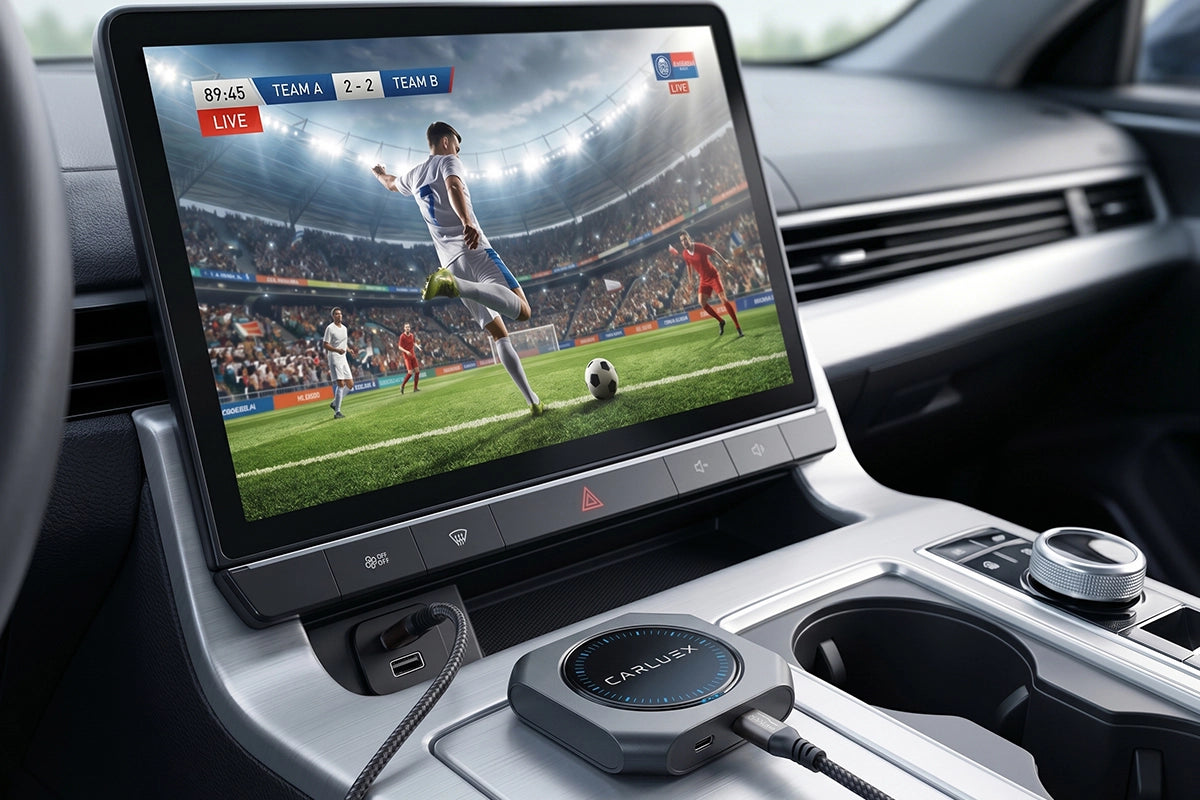

The update to iOS 26 marks the most profound evolution of Apple CarPlay since its inception. This shift is characterized not just by the "Liquid Glass" design language but by a fundamental restructuring of how we interact with our cars. Formerly relegated to the edges of the infotainment system, Apple CarPlay Widgets have now moved to the center of the user experience. This reflects Apple’s new philosophy: moving from a simple "phone mirror" to a "context-aware intelligent layer".
What About The Visual Revolution: Liquid Glass and UX Paradigms?
Liquid Glass is the visual cornerstone of iOS 26, utilizing real-time rendering of refraction, reflection, and fluid motion to couple UI elements with the physical world. In the car, Apple CarPlay Widgets are no longer static blocks; they are semi-transparent layers floating over maps or media, dynamically adapting to ambient light and background colors to reduce cognitive load.
However, this complexity demands high GPU performance, leading to discussions about battery efficiency and thermal management on older iPhones.
What About Design Comparison: iOS 18 vs. iOS 26?
| Dimension | iOS 18/19 Flat Design | iOS 26 Liquid Glass Design | Technical Implementation |
| Material | Solid or simple blur | Real-time refractive liquid | Dynamic Shaders & Reflection Sampling |
| Animation | Linear scaling/panning | Fluid deformation | Physics-driven vertex animation |
| Color Logic | Static Light/Dark | Context-aware dynamic tones | Contrast-compensated color picking |
| Depth | 2D layered stacking | Multi-layer optical depth | Parallax scrolling & diffuse layers |
| Performance | Low power overhead | High GPU resource demand | Higher battery pressure on older devices |
What About Democratizing Apple CarPlay Widgets?
 CARLUEX AIR is one of the easiest ways to add wireless CarPlay. Browse CARLUEX wireless adapters to find the right fit for your car.
The standout strategy of iOS 26 is the "democratization" of deep customization features previously reserved for CarPlay Ultra. Even in vehicles without multi-screen digital cockpits, users can now enjoy a highly personalized dashboard on a single central screen.
This change allows developers to adapt iPhone widgets to the car via the WidgetKit framework with minimal friction, rapidly expanding the Apple CarPlay Widgets ecosystem.
What About Adapting to Screen Size and Widget Stacks?
iOS 26 organizes widgets into "Stacks," solving the conflict between limited screen space and information density.
-
Standard Layout: On 7-inch to 9-inch screens, the system typically allows one active widget stack, requiring users to swipe or use "Smart Rotate".
-
Enhanced Layout: Screens over 11 inches can display two or three Apple CarPlay Widgets stacks side-by-side.
-
-
Capacity: Each stack holds up to 5 widgets. Systems use "Smart Rotate" to surface the most relevant info based on time (commute), location (delivery lockers), or recent behavior.
What About Deep Dive: Top Apple CarPlay Widgets Evaluated?
What About Amazon: Logistics and Geo-Fencing Integration?

The Amazon widget focuses on delivery transparency. It triggers notifications when a package is "out for delivery" or stored in an Amazon Locker. While it allows for deal browsing, this is strictly intended for parked use, as browsing while driving constitutes a major safety violation.
What About Photos: Aesthetics and Privacy?
Photos widgets are the premier way to personalize the cabin. Liquid Glass gives photos soft, refractive borders, turning the dash into a digital frame.
-
Pro Tip: Curate a specific "CarView" album to avoid the embarrassment of utility bills or private screenshots appearing when you have passengers.
-
What About Reminders: The Siri-Driven Assistant?
The Reminders widget turns your car into a personal assistant. While you can click items to check them off, adding new tasks while driving is restricted to Siri to ensure safety.
| Feature | Interaction Mode | Driving Limitation | Optimization |
| Checking Lists | Touch/Click | Basic interaction only | Keep tasks under 5 words |
| Adding Tasks | Siri Voice | Hands-free | Use location triggers |
| Truncation | Auto-scaling | Long text is cut off | Use short, clear phrases |
What About ChatGPT: Reshaping Voice Interaction?

With generative AI, the ChatGPT widget is replacing traditional voice assistants. Its "Voice Mode" handles complex, contextual conversations, allowing drivers to analyze meeting notes or ask deep questions without looking at the screen.
What About Entertainment: Dynamic Lyrics?
Apps like Dynamic Lyrics represent the power of the third-party Apple CarPlay Widgets ecosystem. For a small fee ($5/year or $10/lifetime), it brings real-time lyrics to the dashboard, perfect for road trip karaoke.
What About Data-Driven Monitoring: Weather and Sports?
What About Weather: Multi-Dimensional Awareness?
iOS 26 offers four weather widget styles:
-
Daily Overview: Basic temp and conditions.
-
5-Day Forecast: Strategic for long-distance travel.
-
Details: Includes UV index, wind speed, and precipitation.
-
Sunrise/Sunset: High-value for scenic drivers and photography enthusiasts.
What About Sports: The Real-Time Scoreboard?
Apps like theScore and Cricbuzz turn the dashboard into a real-time scoreboard for NBA, Cricket, and Football. These widgets utilize live-data sockets to keep latency under 500ms, providing a safer alternative to checking phones at red lights.
What About Smart Home: The Final Ten Miles?
Apple Home and Google Home widgets bridge the gap between your car and house. Users can trigger "Home Scenes" (open garage, adjust AC, turn on lights) as they approach their driveway using geo-fencing shortcuts.
What About Technical Performance and Hardware Constraints?
While visually stunning, Liquid Glass places significant strain on hardware.
What About Energy and Thermal Modeling?
Liquid Glass requires constant GPU rendering. On older models, GPU load can hit 40%, causing noticeable heat.
| Model | Fluidity (FPS) | Battery Drain (per hr) | Recommended Setting |
| iPhone 17 Pro Max | 60 FPS | 8% - 10% | All Features On |
| iPhone 15/16 | 45 - 60 FPS | 12% - 15% | Standard Liquid Glass |
| iPhone 13 / Mini | 30 FPS | 18% - 22% | Enable "Reduce Transparency" |
| iPhone 11 / SE 2 | 24 FPS (Lags) | >25% | Disable Widgets |
What About Readability Challenges?
Direct sunlight can cause high-transparency UI to become unreadable. iOS 26.2 introduces "Smart Display Zoom" to adjust UI density, but users should be wary of crowding the display, which increases the risk of mistaps while driving.
What About Safety and 2026 Traffic Regulations?

As of 2026, many US states have upgraded distracted driving to a "primary offense".
-
$500 Fines: Repeat offenders in states like Massachusetts face heavy fines and insurance surcharges.
-
The 2-Second Rule: To comply with NHTSA guidelines, Apple CarPlay Widgets are designed so that no task should take the driver's eyes off the road for more than 2 seconds.
-
Parking Lock: Video streaming (AirPlay) is now supported but strictly locked to "Park" mode.
What's the Bottom Line?
iOS 26 and the Apple CarPlay Widgets ecosystem have redefined the driving experience. By blending the fluid Liquid Glass design with contextual utility, Apple has moved beyond mirroring to creating a truly intelligent co-pilot.
For the best experience, balance your widget stack based on your needs:
-
Commuters: Prioritize Reminders, Podcasts, and Weather.
-
Travelers: Use Amazon Tracking, 5-Day Forecasts, and Sports Scores.
-
Home Automation Fans: Keep Home/Google Home shortcuts at the top.
Always remember: while technology makes the drive smarter, safety remains the priority. Utilize "Reduce Transparency" or "Driving Focus" to ensure your digital companion never becomes a physical hazard.


Αφήστε ένα σχόλιο
Όλα τα σχόλια ελέγχονται πριν δημοσιευθούν.
Αυτή η τοποθεσία προστατεύεται από το hCAPTCHA και ισχύουν η Πολιτική απορρήτου και οι Όροι Παροχής Υπηρεσιών του hCaptcha.