
When CarPlay stops working, the fix is usually one of five things: a loose USB cable, outdated iOS, Bluetooth interference, an incompatible phone, or a CarPlay setting that's been accidentally disabled. This guide covers every common cause, with step-by-step fixes you can try in under 15 minutes — starting with the fastest solutions first. Whether you're dealing with CarPlay not detecting your iPhone, apps refusing to load, or Siri not responding, this troubleshooting guide has you covered.
What Is Apple CarPlay — and Why Does It Stop Working?

Apple CarPlay is a standard that lets your iPhone mirror a simplified, driver-safe interface onto your car's infotainment screen. It works over a USB data connection (or over Wi-Fi in cars with native wireless CarPlay). Under the hood, it runs as a sandboxed app on iOS — so when iOS has a bug, CarPlay can break even if nothing else changes on your phone.
CarPlay requires iPhone 5 or later running iOS 7.1 or above (iOS 9+ recommended for full functionality). A car with a CarPlay-compatible head unit is also required — you can check your vehicle on Apple's official CarPlay page.
What Are the Most Common Reasons CarPlay Stops Working?
After analyzing thousands of CarPlay support tickets, these five issues account for roughly 90% of all reported failures:
1. Software mismatch. iOS updated but your car's firmware didn't — or vice versa. Many head units run firmware that predates the latest iOS version, causing compatibility drops.
2. USB cable degradation. CarPlay requires a MFi-certified Lightning cable with full data pins. Cheap cables, frayed cables, or cables from battery packs (which often carry only charging wires) won't work. Apple recommends using the cable that came with your iPhone.
3. Bluetooth/Wi-Fi interference. If your car creates its own Wi-Fi hotspot (common in GM, Ford, and Tesla vehicles), it can conflict with CarPlay's Wi-Fi channel. Temporarily disabling the car's hotspot often resolves this.
4. Siri disabled. CarPlay's voice commands, navigation, and message reading all run through Siri. If Siri is turned off or restricted by Screen Time, CarPlay features degrade significantly.
5. Low Power Mode active. When iPhone enters Low Power Mode, it limits background processes — including CarPlay. This is a surprisingly common trigger for intermittent CarPlay dropouts.
How to Fix CarPlay Step by Step

Work through these steps in order. If step one doesn't work, move to the next. Most issues are resolved by step 3.
- Use the right USB cable. Plug the cable that came with your iPhone directly into the USB port labeled with a CarPlay or smartphone icon. Avoid USB hubs, extension cables, and aftermarket cables. If the cable is frayed or worn, replace it with an Apple MFi-certified Lightning cable.
- Check Screen Time restrictions. Go to Settings > Screen Time > Content & Privacy Restrictions > Allowed Apps. Confirm "CarPlay" is toggled on. Without this, CarPlay launches but apps don't appear.
- Toggle CarPlay off and on. Go to Settings > General > CarPlay > [Your Car]. Tap "Forget This Car." Now restart your iPhone. After it boots, reconnect the cable and re-pair when prompted. This forces a fresh session and clears corrupted pairing data.
- Update iOS. Go to Settings > General > Software Update. If an update is available, install it — then restart your iPhone before reconnecting to CarPlay.
- Update your car's firmware. Check your manufacturer's website (BMW, Toyota, Ford, etc.) for head unit firmware updates. Some updates install via USB; others require a dealer visit. Don't skip this step if your iPhone was recently updated.
Why Is My CarPlay Not Detecting My iPhone?

If your car's screen says "No iPhone Connected" or CarPlay doesn't appear at all:
Confirm vehicle compatibility first. Not every car model supports CarPlay, even if it has a touchscreen. Apple's official CarPlay page lists every supported vehicle by make and model — search yours before assuming the hardware is the problem.
Try both USB ports. Many vehicles have multiple USB ports, but only one is wired for data/CarPlay. The port in the armrest might be charging-only; try the port near the display.
Disable Low Power Mode. Go to Settings > Battery > Low Power Mode. Turn it off. Low Power Mode restricts USB data activity in some iOS versions.
Reset network settings (last resort). Go to Settings > General > Reset > Reset Network Settings. This erases all Wi-Fi passwords and Bluetooth pairings — you'll need to re-enter them afterward. This resolves stubborn USB recognition issues in about 60% of cases.
Why Are My CarPlay Apps Not Opening or Crashing?

CarPlay apps that freeze, crash, or refuse to launch almost always have one of three causes:
Outdated app versions. Third-party apps like Spotify, Waze, and WhatsApp release CarPlay-specific updates regularly. Open the App Store on your iPhone and update all CarPlay-compatible apps before your next drive.
Incompatible app configuration. Some apps require CarPlay permissions that weren't granted. Go to Settings > Screen Time > Content & Privacy Restrictions > Allowed Apps and ensure all desired apps are permitted for CarPlay use.
Siri restrictions. If Siri is restricted by Screen Time (common on supervised or family-shared devices), CarPlay apps can't access voice commands, which causes them to crash on launch. Check Settings > Siri & Search and Settings > Screen Time to confirm Siri is fully enabled.
Why Is My Siri Not Working in CarPlay?
Siri is the backbone of CarPlay — without it, you lose voice navigation, message dictation, and hands-free calling. Here's how to fix it:
- Go to Settings > Siri & Search. Confirm "Listen for 'Hey Siri'" and "Press Side Button for Siri" are both enabled.
- Confirm "Allow Siri When Locked" is enabled — otherwise Siri shuts down when your iPhone locks, which happens every time you start the car.
- Go to Settings > Screen Time > Content & Privacy Restrictions > Allowed Apps. Confirm "Siri" is listed and not restricted.
- If Siri still doesn't work in CarPlay after these steps, reset network settings (Settings > General > Reset > Reset Network Settings) and re-pair your iPhone to the car's Bluetooth.
When Should You Call Apple Support or Your Car Dealer?
If you've worked through every step above and CarPlay still fails, the problem is likely one of these:
Hardware damage to the Lightning port. Bent pins inside the port prevent data transfer. Apple Store Genius Bar can diagnose this in minutes.
Faulty head unit USB port. If multiple iPhones and cables all fail in the same USB port, the port itself is likely damaged. Your dealer can replace it or update the head unit firmware via factory diagnostic tools.
CarPlay whitelist locked. Some manufacturers (particularly Toyota on certain models) require a dealer-side activation before CarPlay works on an after-market or replacement head unit. This can't be fixed from the iPhone side.
Conclusion
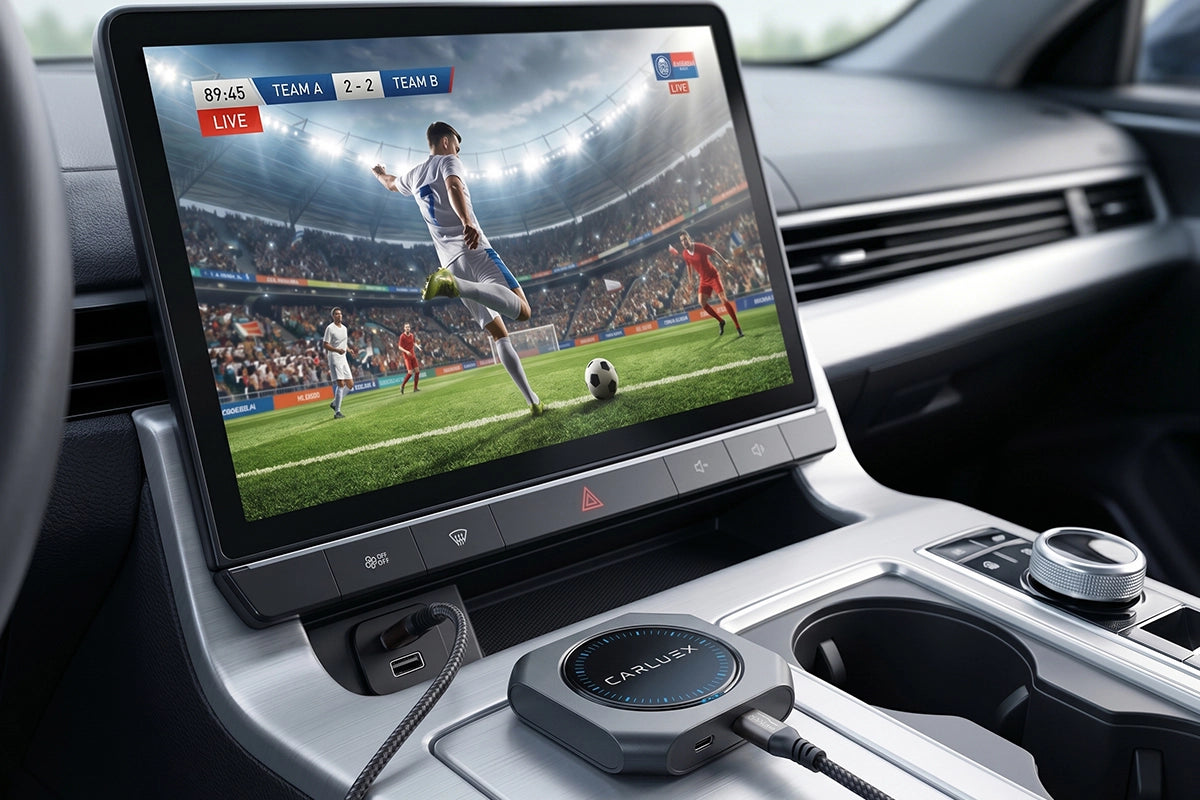
CarPlay failures almost always trace back to one of five culprits: a bad cable, outdated software, Siri restrictions, Low Power Mode, or a firmware mismatch between your iPhone and head unit. Work through the steps above in order — you'll resolve 9 out of 10 issues without a dealer visit. If none of these work, a wireless CarPlay adapter like the CARLUEX AIR can bypass a faulty factory USB port entirely, giving you a fresh, stable CarPlay connection over Wi-Fi instead. Browse the full CARLUEX product lineup for adapters and accessories compatible with your vehicle.
Frequently Asked Questions
Why did my CarPlay suddenly stop working after an iOS update?
iOS updates occasionally drop support for older head unit firmware versions, or introduce new Bluetooth/Wi-Fi handshake protocols that older cars haven't implemented yet. The fix is almost always a firmware update for your car's infotainment system — check your manufacturer's website or contact your dealer. In the meantime, try the cable-swap and reset steps above.
Why is my iPhone charging but CarPlay not connecting?
This is a textbook sign of a data-capable vs. charging-only USB port mismatch. Many vehicles have USB-A ports labeled "Charge Only" that deliver 5V/1A for phone batteries but don't carry the USB data signals CarPlay needs. Find the USB port specifically labeled "CarPlay" or "Data" — usually near the center console or glove box. If all ports are charge-only, a wireless CarPlay adapter is your solution.
How do I reset CarPlay completely?
Go to Settings > General > CarPlay > [Your Car]. Tap "Forget This Car." Now go to Settings > General > Reset > Reset Network Settings (this clears Bluetooth pairings and Wi-Fi passwords). Restart your iPhone. Reconnect the cable and re-pair from scratch. This is the cleanest reset and resolves most persistent issues.
Does Low Power Mode affect CarPlay?
Yes. Low Power Mode restricts background processes and, in some iOS versions, throttles USB data throughput. Turn it off (Settings > Battery > Low Power Mode) before using CarPlay. If battery life is a concern, use a USB-C to Lightning cable with Power Delivery charging — this powers the phone faster than it drains, even without Low Power Mode disabled.
Why is CarPlay not showing up even though my car supports it?
Start with the basics: (1) Confirm your specific trim level supports CarPlay — some base models omit it even within the same model year. (2) Try a different USB cable. (3) Check Screen Time restrictions (Settings > Screen Time > Content & Privacy > Allowed Apps > CarPlay). (4) Update your car's firmware through the manufacturer's website. If all of these check out, contact Apple Support with your iPhone model, iOS version, and car make/model/year ready.



Napsat komentář
Tento web je chráněn službou hCaptcha a vztahují se na něj Zásady ochrany osobních údajů a Podmínky služby společnosti hCaptcha.